The essentials
- At least seven square metres of unencumbered outdoor space for each child.
- A fence or barrier that children of preschool age or under cannot go through, over or under.
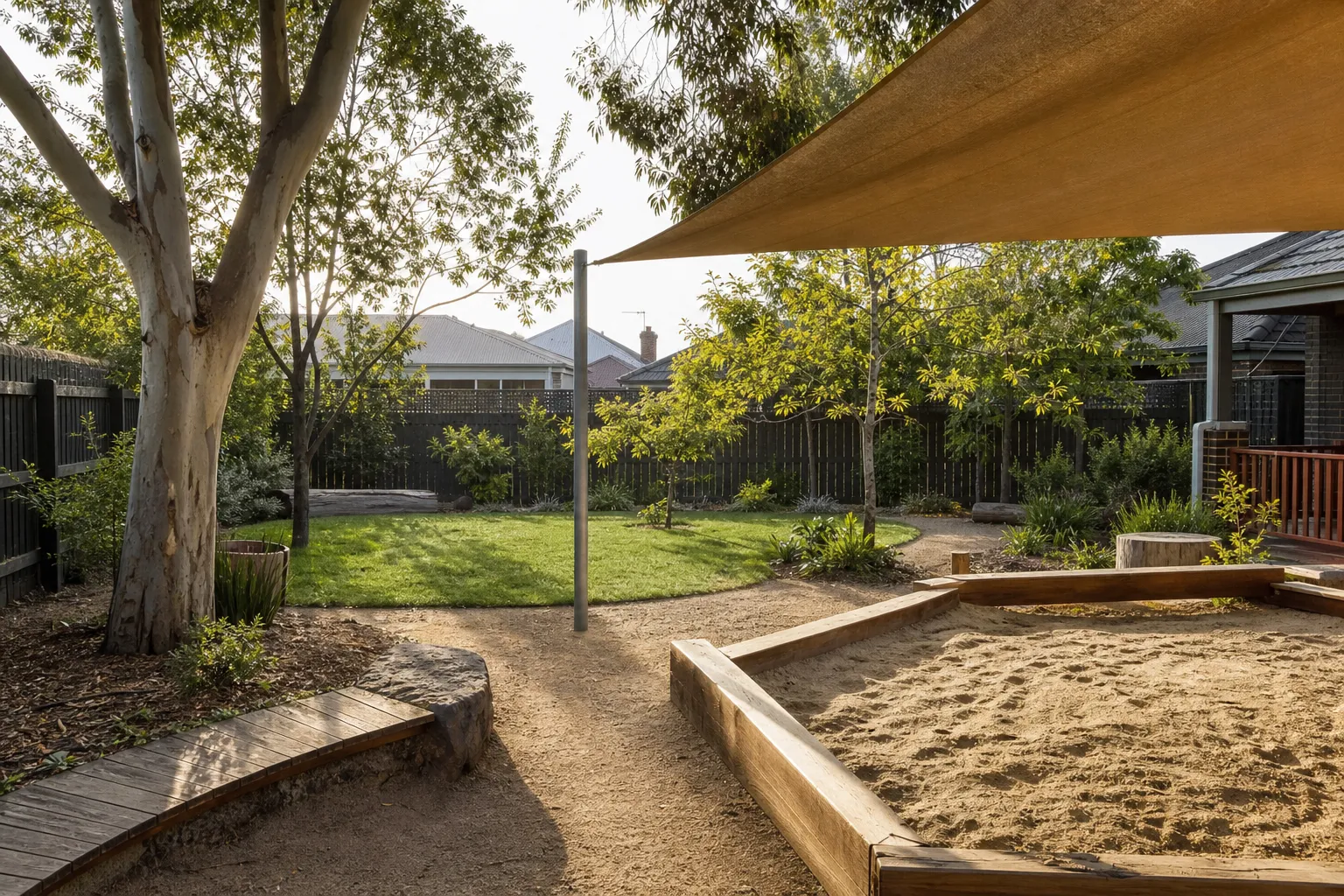
- Adequate shade, and outdoor spaces that let children explore the natural environment.
- For facilities built to the VSBA handbook, tan bark or mulch as the soft fall option and no choking hazards beside spaces for under-threes.
Seven square metres
ACECQA's guide to regulation 108 states that the service premises must have at least seven square metres of unencumbered outdoor space for each child being educated and cared for. The regulation applies to centre-based services and family day care venues.
"Unencumbered" is the word that matters when you redesign a yard. Structures, storage and areas children cannot use may not count. Check with your regulatory authority before a new feature takes space out of the calculation.
Fencing
The National Regulations require any outdoor space used by children to be enclosed by a fence or barrier of a height and design that children of preschool age or under cannot go through, over or under.
New surfacing changes ground levels. A raised rubber mound, a garden edge or a stack of tanbark against the fence can turn into a step. Walk the fence line after any surfacing work.
Shade and the natural environment
Regulation 114 deals with shade and regulation 113 with the natural environment. Services must provide adequate shaded areas, and outdoor spaces that allow children to explore and experience the natural environment.
That second requirement is a quiet argument against rubber from fence to fence. Tanbark, sand, grass, soil and planting are surfaces too, and they count towards the experience the regulation describes.
What the VSBA handbook adds
For early learning facilities delivered under the Victorian School Building Authority's handbook, the outdoor play space must comply with the National Regulations and the Child Safe Standards, and the handbook adds specifics:
- tan bark or mulch must be used as a soft fall option, where required;
- surfaces, particularly those next to spaces for children under three, must not include choking hazards such as pebbles, gravel, rubber crumb or synthetic turf infill;
- shade must be provided to sandpits, mud and other static play areas.
Questions committees ask
Does a rubber surface count as outdoor space?
Surface type does not decide whether space is unencumbered; usability does. Ask your regulatory authority about anything unusual.
Can we have a waiver for space or shade?
The National Regulations provide for service waivers in some circumstances. ACECQA's guide explains the process.
Is rubber crumb banned in kinders?
The VSBA handbook excludes loose rubber crumb and turf infill beside under-three spaces in its projects because of choking risk. Bound wet pour is a different product, but check its condition: a worn surface can shed granules.
Sources for this chapter
Tanbark is general information. Requirements change and every site is different: confirm with the regulator, your department or sector body, and a competent playground inspector.