The essentials
- Equipment with a fall height of 600 mm or more, and swings, slides and spinning items, need impact attenuating surfacing.
- Loose fill goes in at 300 mm minimum and must stay above 200 mm.
- Unitary surfaces such as wet pour need a drop test after installation and every three years.
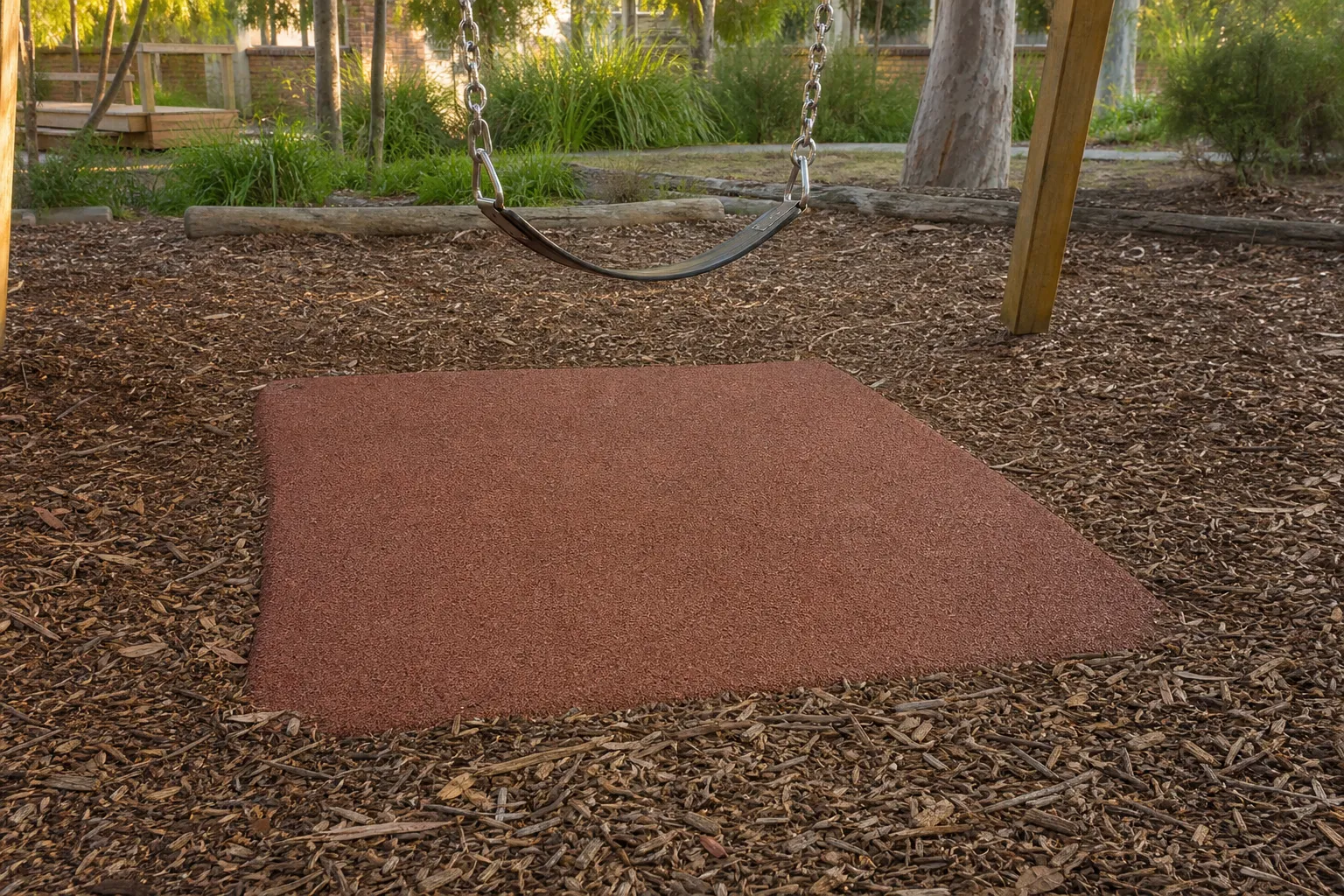
- A rubber pad at wear points inside a tanbark yard cuts topping-up without covering the whole yard in rubber.
Where a cushioning surface is required
Kidsafe's surfacing sheet says all playground equipment with a fall height of 600 mm or more, and specific items such as slides, swings, carousels, cableways and rocking and spinning items, must have impact attenuating surfacing beneath and around it.
The surface must meet the test requirements of AS 4422, and the supplier should give you documented evidence of that for your records.
Tanbark and sand
Loose fill cushions by trapping air between particles. It is generally cheaper up front and needs regular maintenance and topping up. Kidsafe cites AS 4685.0 as requiring loose fill to be installed at a minimum depth of 300 mm and maintained at not less than 200 mm.
In a kinder, tanbark and sand are also play materials. Children dig, carry and build with them, which is exactly why depth has to be checked often: it migrates.
Wet pour and rubber tiles
Unitary surfaces stay where they are put and give wheelchairs and trikes a firm path. They cost more, heat up in sun and need periodic testing. Kidsafe advises avoiding joins in high-traffic areas such as beneath swings and at slide run-outs.
They are not maintenance-free. See inspections and records.
The mixed yard
Kidsafe notes that unitary surfaces work well in combination with loose fill, as a fixed pad beneath heavy traffic areas. That reduces both the cost and the labour of replenishing loose fill.
A common Victorian layout: tanbark under and around the climbing equipment, a wet pour pad under each swing seat and at the foot of the slide, a rubber or concrete trike path, and grass or planting everywhere else.
Questions committees ask
How often does tanbark need topping up?
It depends on use. Check depth monthly at the wear points and budget for a top-up at least yearly.
Is sand acceptable under equipment?
Yes, if it is a sand tested to AS 4422 at the depth the supplier specifies. Different sands may need different depths.
Does a borderless tanbark area work?
Loose fill is easily displaced and should be retained by a border that does not itself create a trip hazard or sharp edge.
Sources for this chapter
Tanbark is general information. Requirements change and every site is different: confirm with the regulator, your department or sector body, and a competent playground inspector.