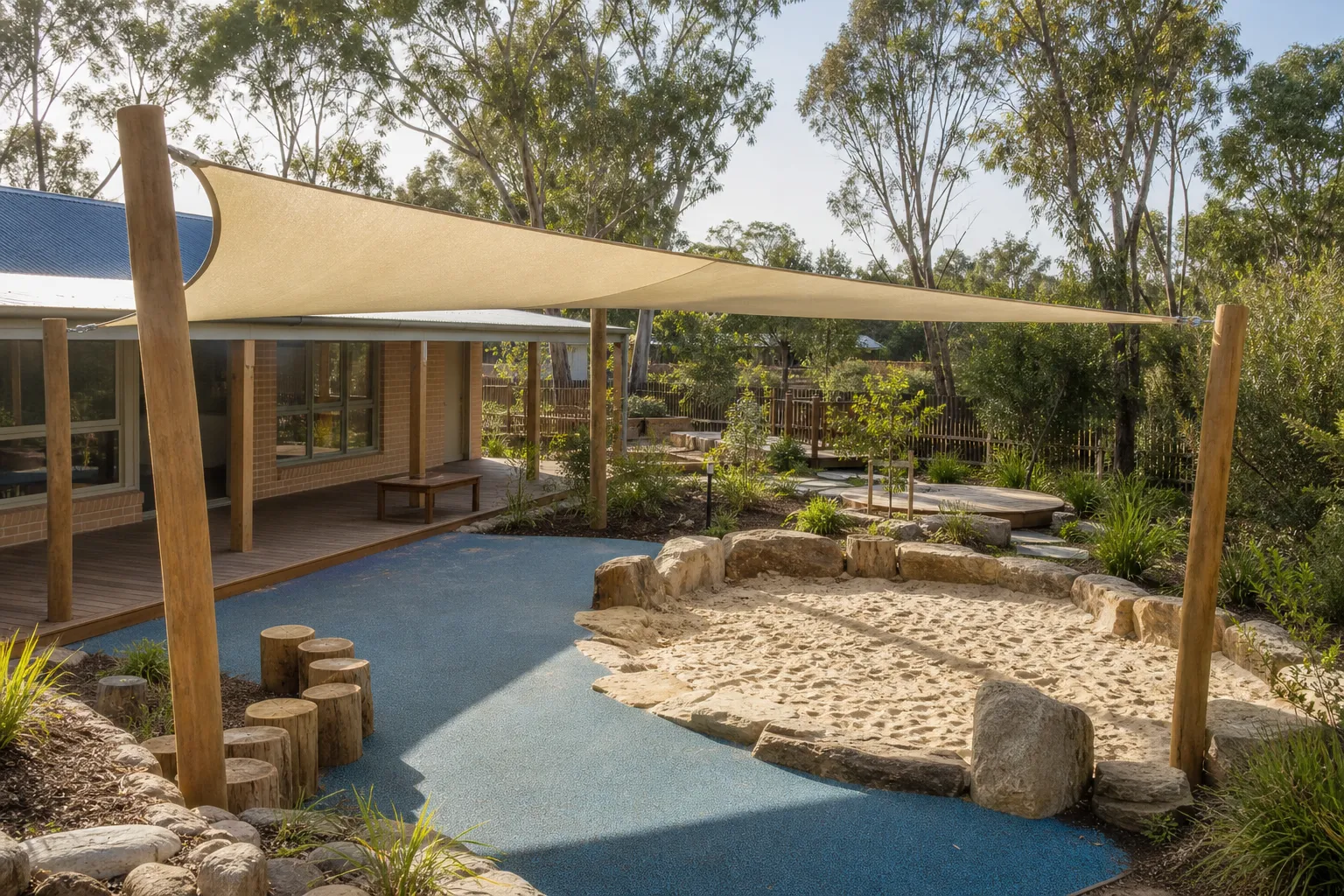
The essentials
- Rubber, synthetic grass, sand, metal and concrete all heat rapidly in sun.
- A surface at 50 °C or more is too hot for play, according to Kidsafe NSW.
- The National Regulations require adequate shade; the VSBA handbook says shade should cover all play equipment.
- Shade posts must not be installed in impact zones.
The risk
Queensland's early childhood regulator reports that playground equipment and surfaces such as metal, concrete, stone, sand, rubber, plastic, soft fall mats and synthetic grass can heat up rapidly and retain heat, and that hot surface burns commonly affect children up to two years of age.
Its guidance to services is practical: regularly check the temperature of outdoor equipment and surfaces on hot days, consider whether children should wear shoes outside, and train all staff to test surface temperatures.
A morning routine
Kidsafe NSW recommends checking the surface before children enter the play space, with a thermometer or by holding a hand just above it. If it feels too hot, or measures 50 °C or more, it is too hot for play.
- Add the check to the yard opening checklist from November to March.
- Test in full sun, on the surfaces babies and toddlers sit and crawl on.
- Re-test after lunch. Surfaces peak in the afternoon.
- Have a plan for the yard: which zones close, which stay open.
What the rules say about shade
Regulation 114 of the National Regulations requires adequate shaded areas. The VSBA handbook goes further for its projects: shade should be provided to cover all play equipment, designed for peak UV times and peak periods of use, and in early learning facilities shade must be provided to sandpits, mud and other static play areas.
The handbook also states that shade posts must not be installed in impact zones, which is easy to get wrong when a sail is added to an existing playground.
Designing it in
Kidsafe advises lighter coloured rubber, which absorbs less heat, while noting that large light areas can glare; shade structures or trees reduce both problems. SunSmart publishes shade guidelines and sample policies for schools and early childhood services.
Trees take years. Plant them now and use sails in the meantime.
Questions committees ask
Is tanbark cooler than rubber?
Organic loose fill generally holds less heat than dark rubber, but sand and any surface in full sun can still burn. Check it.
Do we need a shade audit?
It is a useful exercise. SunSmart provides guidance for services assessing their shade.
Can we fit a sail over existing equipment?
Yes, with the posts outside the impact zones and footings designed by a qualified person.
Sources for this chapter
- Queensland Government, Early Childhood: Hot day, safe play
- Kidsafe NSW: Playground Surfacing information sheet (PDF)
- ACECQA: Guide to the NQF, Quality Area 3 (physical environment)
- Victorian School Building Authority: Building Quality Standards Handbook, technical specifications
- SunSmart: Schools and early childhood
- SunSmart (Cancer Council Victoria): Shade Guidelines (PDF)
Tanbark is general information. Requirements change and every site is different: confirm with the regulator, your department or sector body, and a competent playground inspector.