The essentials
- Plan where water goes before adding a pump, creek bed or mud kitchen.
- Wet pour is porous, so the base under it needs falls and an outlet.
- In Victoria, plumbing and drainage work needs a registered or licensed plumber, with a compliance certificate over $750.
- Every staff member should know where the water shut-off is.
Where the water goes
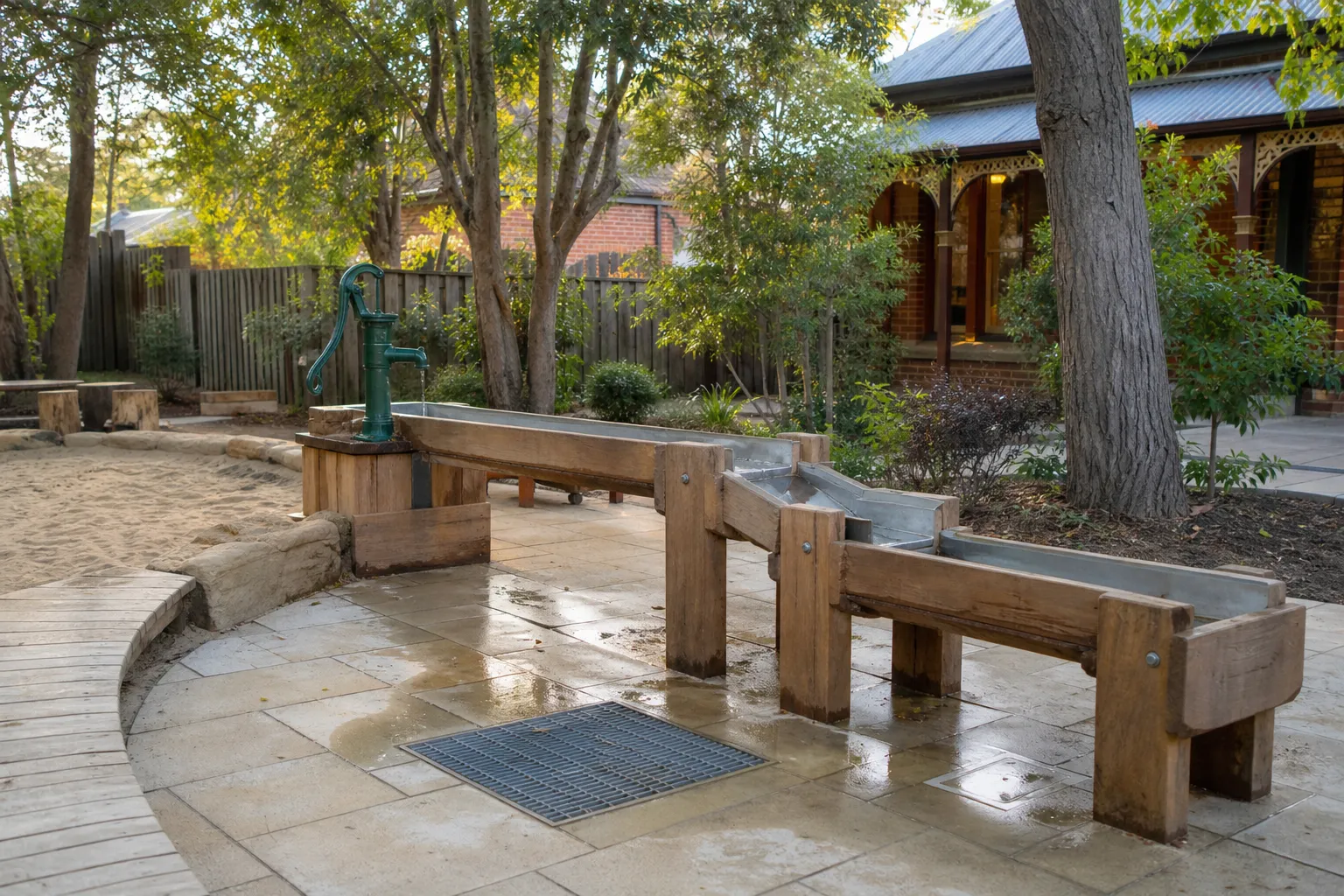
A hand pump or water trough sends a steady stream across whatever surface surrounds it. Put water play on a surface that drains and can be hosed, set a little lower than the areas around it, with a grated pit or a gravel soak at the low point.
Keep it away from the tanbark under climbing equipment. Loose fill that stays wet compacts, breaks down and stops cushioning.
Sandpits
A sandpit needs a free-draining base or it becomes a pond. The VSBA handbook requires shade over sandpits in early learning facilities, and Kidsafe's maintenance timetable includes topping up or replacing sand annually if required.
Give the sandpit a hard or rubber apron. It keeps sand out of the tanbark and gives educators somewhere dry to kneel.
Rubber surfaces and standing water
Wet pour lets water through to the base. If the base has no fall, water sits under the rubber, softening the base and feeding mould. Kidsafe notes that fungal growth may occur where a surface is shaded and moist.
Ask the installer to show the falls and the outlet on a drawing. Puddles that remain a day after rain mean the drainage is not working.
What needs a plumber
Taps, drinking fountains, pumps connected to mains water, pits and stormwater connections are plumbing and drainage work. In Victoria that work must be done by a plumber registered or licensed with the Building and Plumbing Commission, and a compliance certificate is required where the work exceeds $750.
Know where the main is
A split hose or a tap left running under pressure can flood a yard and undermine a surface in an hour. Every educator should know where the water meter and shut-off valve are, and the location should be on the emergency plan.
The steps are the same everywhere. A Sydney plumbing firm has written a clear walk-through of how to find and turn off a water main that is worth sharing with staff, even though the examples are from New South Wales.
Questions committees ask
Can water play run off into the garden?
Clean water can be directed to planting. Keep it away from footings and from loose-fill impact areas.
Is a recirculating pump plumbing work?
A self-contained unit may not be, but any connection to mains water or drains is. Ask a licensed plumber.
Who fixes a blocked pit?
A licensed plumber or drainer. Do not lift surfacing to investigate yourself.
Sources for this chapter
- Victorian School Building Authority: Building Quality Standards Handbook, technical specifications
- Kidsafe NSW: Playground Safety Management System (PDF)
- Kidsafe NSW: Playground Surfacing information sheet (PDF)
- Building and Plumbing Commission: Plumbing compliance certificates
- Building and Plumbing Commission: Engaging a plumber
Tanbark is general information. Requirements change and every site is different: confirm with the regulator, your department or sector body, and a competent playground inspector.